We Are All But One

“When you grow up you tend to get told that the world is the way it is and your job is just to live your life inside it. Try not to bash into the walls too much. Try to have a nice family life, have fun, save a little money. That’s a very limited life. Life can be much broader once you discover one simple fact: everything around you that you call life was made up by people no smarter than you. And you can change it. You can influence it… Once you learn that, you'll never be the same again.” - Steve Jobs
I always felt there was something off about the way life and success were presented to me. The idea that the world was already defined, that my job was to find a way to live inside it without bumping into the walls too much, never quite made sense. I pushed against familial, cultural, and societal structures almost instinctively. And yet, paradoxically, I also wanted to belong, so bad.
I knew I didn’t want an ordinary life. I wasn’t built for one anyway. But I couldn’t make sense of the contradiction inside me. For decades, I believed that contradiction meant something was wrong with me.
I thought that if I wanted coherence, I would have to choose: between being the responsible leader or the free spirit, the rebel or the one who plays by the rules, the romantic dreamer or the rational adult. I believed becoming “one thing” was the goal, that alignment would come from picking a side.
That was never the goal.
Coherence comes from integration, not suppression.
EARLY FRAGMENTS
Growing up in a traditional environment—born in Lebanon, attending Christian school in France—while being gay, nerdy and fundamentally misaligned with the structures around me created early confusion and split. I didn’t know how to belong, and in so many ways I didn’t want to. So I rebelled.
I fought with my parents constantly, stole my brother’s clothes to look more like a boy, snuck in the TV room at night to play video games, became the chaotic agent in class and skated for identity more than tricks. I surrounded myself with outsiders and dated on the margins. A part of me was trying to find truth way before I could rationalize what I was doing.
What started as rebellion eventually became dysregulation once I entered adulthood.
My twenties were characterized by explosive chaos. Every part of me was running unchecked: the workaholic overachiever, the reactor, the romantic, the loyal friend, the wild one, the partier, the dreamer. I could be loving and harsh in the same hour. I would work eighty-hour weeks, and partied hard to escape the weight of responsibilities. It was wild, it was fun, but it was exhausting.
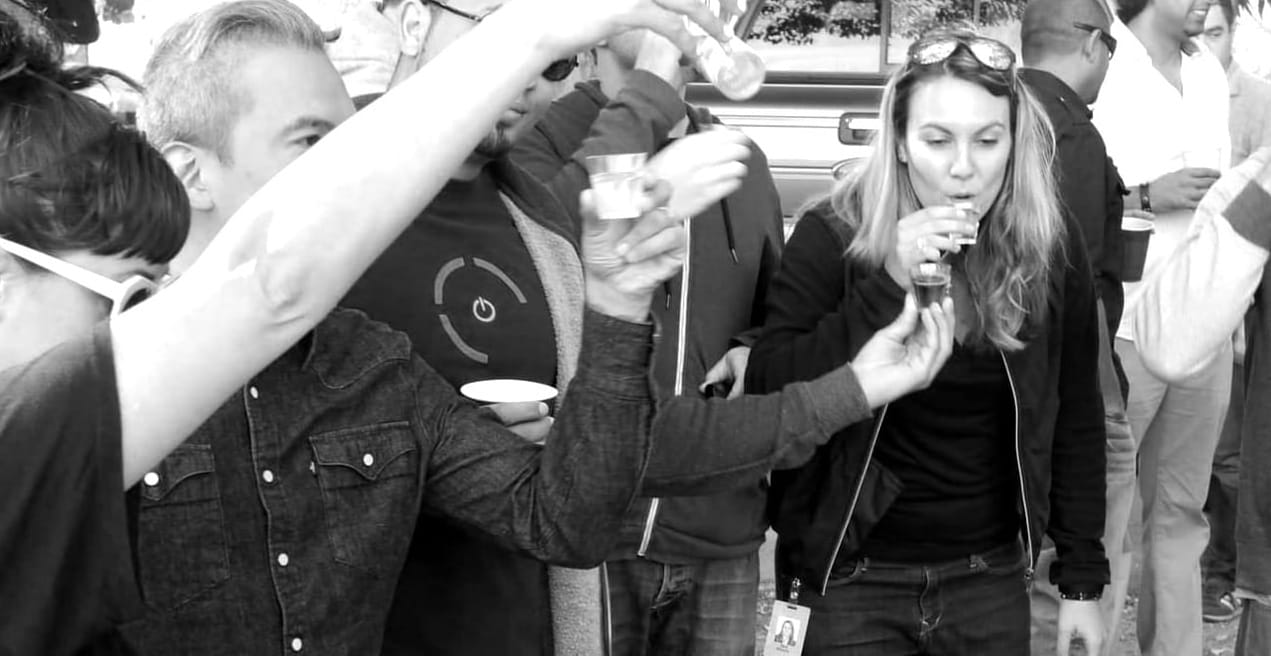
Underneath it all I felt a constant hum of unrest. I had no idea what I was actually trying to build, or run away from.
RUPTURES AND RECKONING
My thirties forced the reckoning I had postponed. I was lost: aware that I was deeply attached to control, and at the same time craving release from it.
I followed my gut and made moves that felt necessary but destabilizing:
- I ended a five-year relationship that was flatlining.
- I quit my first job as an Executive Producer, burned out and deeply frustrated by decisions I didn’t agree with.
- I took a break to travel the world and figure out who I was outside of work, and what I actually wanted out of life.

What I was really trying to understand was why I had stayed in misaligned situations in the first place, and why, when conflict arose, I couldn’t navigate it with clarity or empathy.
Instead, I defaulted to anger, projection, and rigid narratives I was convinced were “the truth,” leaving little room for complexity or for multiple realities to coexist.
I was thirty two, deeply attached to control, and increasingly aware that it was costing me something.
I had some awareness of my patterns, but no real tools to change them. What helped wasn’t just the time away from responsibility, but what I did with that time.
- I read more psychology than I had read books in the previous decade.
- I rediscovered who I was when I wasn’t being pulled by expectation or performance. A calmer, more spontaneous, freer version of myself.
- I entered a passionate relationship with one of the most powerful people I’ve ever met—Isabelle (a pseudonym to protect privacy).
That relationship cracked me open in a way I hadn’t experienced before. It exposed the depth, longing, and vulnerability I had suppressed until then. More importantly, it mirrored patterns I could no longer deny or blame on others: when I was hurt, I lashed out. And I prioritized being right over finding a shared path forward.
I was so reactive and self-centered in moments of fear that I couldn’t make space for another person’s reality if it contradicted mine.
That rupture changed me.
Not because it hurt (though it did), but because it made it impossible to escape myself:
- By the time I met Isabelle, I had already started to do inner work. I was becoming more self-aware, and most importantly, embracing a growth mindset that demands honesty as a baseline.
- Isabelle was the first person to hold up a mirror. I finally saw that my behavior in fear contradicted everything I wanted: partnership, stability and, as cheesy as it sounds, peace and love.
The chaos wasn’t coming from life happening to me. It was coming from parts of me I didn’t understand.
That level of self-confrontation didn’t give me all the answers, but it dismantled the illusion that I was as aware or mature as I believed. It became clear that if I wanted to become the person I aspired to be, there was deeper work ahead.
LEADERSHIP & RESPONSIBILITY
Shortly after, I moved to Los Angeles and joined Riot Games. Despite not wanting to return to an Executive Producer role, I stepped into one. I didn’t feel ready, but life didn’t care about that, and I’m not one to turn down an opportunity to learn and grow.
Months into the job, the pandemic hit. Suddenly, I was leading a rapidly scaling project under unprecedented conditions, while privately wrestling with fear, insecurity, and imposter syndrome. I didn’t fully trust myself yet to navigate the complexity of the business, the interpersonal dynamics, or the weight of responsibility the role demanded.
Part of me wanted to rise to the challenge. Another part resisted it.
I started skating the Venice boardwalk for hours, morning and night. My body needed freedom while my mind carried responsibility. Inside me lived a tense mix of loyalty to my team, inadequacy, and a fantasized desire to escape altogether.

As the organization grew, dysfunctions emerged. And for the first time in my career, I encountered professional failure. Not all of it was my fault, but as the leader, it was my responsibility. I could see clearly how my own patterns contributed: difficulty saying no, control that slipped into micromanagement, people-pleasing followed by harsh feedback when frustration built.
I felt exposed in a way I never had before.
That was the moment I committed fully to staying and doing the work. To taking responsibility for my own patterns rather than running from them. I didn’t yet know that this commitment would become the key to freedom and integration.
I dove into coaching and self-development, and started to dismantle my behavioral patterns deliberately. I’ve written in Homecoming about the specifics of that work, but what matters here is this: real growth required leaning in when everything in me wanted to tap out.
Working through deeply wired defensive responses demands the capacity to stay with discomfort, especially when everything in you wants to go towards defensiveness or avoidance.
On the other side of that work lives something precious and rare: clearer communication, deeper trust, more productive conflict, unleashed creativity, genuine connection, and momentum that comes from people feeling like they’re truly on the same side of the table.
The reality is that this work is hard. And not everyone is willing, ready, or able to do it.
I began to notice this asymmetry at work first—between those willing to stay present with discomfort, take responsibility for their patterns, and grow, and those who weren’t there yet. I didn’t realize then that the same asymmetry would later surface just as clearly in my personal relationships.
INTEGRATION AND SYSTEM COHERENCE
It was in my last relationship that these insights fully crystallized.
I learned two fundamental truths:
- First: every human carries patterns formed by early experiences. We all have default reactions, blind spots, and protective behaviors that surface when we feel unsafe. There is no shame in having them—but there is responsibility in noticing them and choosing how we act when they arise.
- Second: no relationship (romantic, familial, or friendship) can be deeply connecting if only one person is doing that work. Real depth requires two people who are aware of their patterns, willing to look at themselves, and able to operate from a place of consciousness rather than reaction. Without that shared awareness, connection either erodes over time or stays surface-level, limited to what can be shared without real depth.
I had already identified many of my patterns. What I couldn’t see was how they reinforced one another. The Internal Family Systems framework gave me a way to understand the system as a whole. And once I understood the system, I could finally start dismantling it.
At its core, IFS proposes that we are not a single, unified personality, but a system of different “parts,” each formed in response to lived experiences and each trying, in its own way, to protect us.
Some parts manage, some defend, some react, some carry old wounds. Integration doesn’t mean getting rid of them, but rather learning to recognize when they’re activated, understanding what they’re protecting, and choosing how to respond rather than being driven by them.
In that relationship, I watched my inner system operate in real time:
- When I felt unsafe, defensive protectors took over.
- When I feared loss, controlling parts stepped in.
- When I felt unseen, reactive parts escalated.
- When I felt neglected, younger parts panicked.
It was no longer abstract. I could see it happening in the micro-moments.
IFS gave me a language and architecture to understand when and why those various parts could show up. It helped me see that I am not a single identity, I am a system: protectors, managers, firefighters, authentic parts, inherited parts, wounded parts, resilient parts.
None of them are good or bad. They were formed in a context that didn’t apply anymore. They protect, even when they sabotage. They react to old realities, not present situations and intentions.
Understanding this changed everything:
- The more I acknowledged these parts, the less they hijacked me.
- The more I understood what they were protecting, the more I could respond from calm and intention rather than fear.
- And most importantly, compassion replaced shame.
Understanding this changed everything. The more I acknowledged these parts, the less they hijacked me.
Integration didn’t erase my perceived contradiction, it gave it meaning:
- The free spirit feeds my creativity.
- The rebel challenges orthodoxy.
- The romantic keeps me open to possibility.
- The operator gives structure to vision.
- The part that once sought escape now finds expression through movement and joy.
- The protector releases control when it no longer has to overcompensate.
Nothing disappeared. Everything became coherent.
WHY INTEGRATION MATTERS
- Integration saved me from cynicism.
I stopped interpreting relational failure as evidence that people are fundamentally bad, untrustworthy, or incapable of depth. Instead, I began to see it as system failure.
No matter how much one person introspects, integrates, communicates, or takes responsibility, if the other is not in a similar process, the system cannot stabilize. Trying to compensate for that imbalance slowly erodes intimacy and, eventually, trust in both the relationship and oneself.
Once I understood that breakdowns often come from incompatibility rather than ill intent, I no longer needed to harden or close myself off to protect against disappointment. I could simply understand the fundamental incompatibility, and take responsibility for my own choices within that awareness.
That shift put power back where it belongs: with me.
It meant choosing more carefully who I invest in. It meant reassessing compatibility not primarily on chemistry, shared values, or intention, but on something deeper and entirely non-negotiable: a shared willingness to introspect, take responsibility for one’s own patterns, and operate from a place of consciousness rather than reaction.
This reframed my relationship to hurt: I started to see that when people act in ways that hurt me, they are often just acting out their own unhealed parts - as opposed to responding to who I am specifically. I don’t need to fix them. I don’t need to internalize them. And I don’t need to make space for it in my life.
That shift moved me from blame and judgment to discernment.
It’s not personal. It’s about the (meta)physics of connection—about which systems can actually sustain depth, and which ones can’t.
- Integration also reframed freedom for me.
Freedom is no longer escape. It’s internal coherence.
I still love traveling and skating as expressions of freedom, but I no longer fantasize about leaving everything behind to feel free. The expectations that once felt suffocating were largely my own.

Freedom, for me, is now authenticity.
I no longer hide my softness to appear strong. I no longer shrink my opinions and feelings to accommodate others. I no longer mute my spirit and silliness to fit a role. I am all of it at once.
Coherence finally came from inclusion, not suppression.
RADICAL SELF EXPRESSION
What I understand now is that radical self expression is not rebellion. It’s not opposition to structure. And it’s not a reaction to insecurity or unintegrated fear.
Before integration, my self expression often lived in opposition: against expectations, against authority, against relationships, against versions of myself I was trying to escape. It looked like freedom, but it was still being driven by unconscious internal conflict.
Integration changed that.
When all parts of me are seen, understood, and held, expression no longer needs to fight for space. It doesn’t need to prove anything. It doesn’t need to push back. It simply is.
It comes from a conscious self that knows what it stands for, what it values, and what it is responsible for.
This is the difference between reaction and authorship.
Integration has given me a life no longer dictated by unconscious parts or inherited patterns. It has given me agency, sovereignty, acceptance, power, and a deep trust in who I am becoming. My intuition now leads, and I use my mind as a tool rather than the driver.
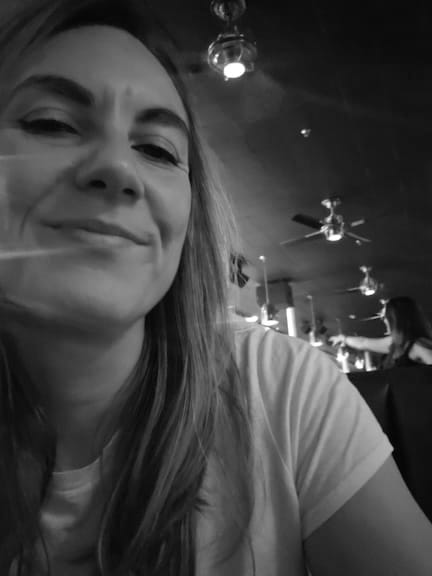
My dreams are getting more clear, authentic, and ambitious.
Not because everything is guaranteed, but because they are a direct expression of my integrated self. They're shaped by choice, discernment and coherence. And I now trust my capacity to build, to love, to create and to respond.
That is the freedom I was always looking for.
And that is what makes everything ahead feel possible . Not in theory, but in practice.
Member discussion