Diamonds & Unicorns (Revisited)

[Editor’s note: This article was substantially revised to reflect a more integrated view of values and to include personal examples from my own journey.]
"Diamonds are to be found only in the darkness of the earth, and truth in the darkness of the mind." – Victor Hugo
Perhaps one of life's greatest challenges is to figure out who we are and what we actually care about.
And for good reasons: long before we get the chance to discover ourselves, we’re taught what to think, what to value, and how to behave. Family, school, culture, media all send strong signals about what matters and who we should be in order to belong. And because we are social beings, belonging doesn't feel optional. Quite the opposite, it feels existential. Moving away from the familiar can feel terrifying.
That is why, as Bonnie Ware recounts in The Five Regrets of the Dying the most common regret she heard from people at the end of their lives was:
"I wish I’d had the courage to live a life true to myself, not the life others expected of me."
Under the weight of those expectations, many of us spend our lives chasing unicorns: adopted or aspirational identities that keep us safe, accepted, and familiar. They look good. They sound right. They help us fit in. But they pull us away from living a life that's authentically ours.
Truth is different. Truth isn’t colorful or comforting. It often comes with loss: loss of certainty, familiarity, and the safety that comes with it. Truth is more like diamonds. It’s formed under pressure, in darkness, through struggles and friction. Diamonds don’t emerge from comfort. Neither does the version of ourselves that can can make us proud.
Values are often used to help us resolve this tension between aspirational identity and authentic identity. They're the highest-level framework we use to define who we are and align our decisions and behaviors with what we believe matters. As Mark Manson puts it:
Personal values are the measuring sticks by which we determine what is a successful and meaningful life.
But if living from our True Self were as simple as reflecting, picking the right values, and expecting behavior to follow, this article would end here.
Life ain't easy. Pressure is inevitable. Stress, fear, loss, ambition all test not just our values, but our character. The real challenge isn’t only choosing values. It’s knowing when values need to evolve, and when we need to grow in order to live up to them.
So the real question becomes: how do values become real?
And how do we stop chasing unicorns and start forging our own diamonds?
I don’t have a tidy playbook. If I did, I’d probably be selling it from Costa Rica with an aggressively spiritual account. But I do have a few hypotheses, grounded in psychology and lived experience, that have helped me understand why values so often fail, and what it actually takes for them to hold.
UNICORNS DISAPPEAR WHEN REALITY HITS
Defining our values is partly reflective, but it's also intuitive. Many of the things we genuinely care about come with a sense of aliveness. We feel curiosity, engagement, and agency when we do them. Whether it’s a job, a relationship, or a way we spend a Sunday afternoon, there is often a signal inside us that points to what we genuinely enjoy, care about, or feel drawn to.
This phenomenon is well explained by the Self-Determination Theory, one of the most well-supported theories of human motivation used in education, leadership, health, and parenting.
SDT distinguishes between autonomous and controlled motivation.
- Autonomous (or intrinsic) motivation is what we experience when we act with a genuine sense of choice and interest.
- Controlled (or extrinsic) motivation by contrast is driven by external pressure. It's when we do something in order to get something that is external to us, like gaining approval, avoiding consequences, or meeting external expectations. It comes from pressure rather than desire.
Both can drive behavior, but they don’t drive the same sense of satisfaction. This matters for values because motivation is what actually allows us to carry them through difficulty. What we do from intrinsic motivation tends to hold when things get hard. But what we do primarily to meet external expectations often doesn’t.
And things will inevitably get hard. Under stress, time, energy, and emotional bandwidth shrink. Our sense of control loosens. In those moments, what we were doing for external reasons gets deprioritized. We start acting “out of character.” The values don’t hold. The self-image cracks.
But pressure doesn't necessarily distort character, it can reveal it.
In simple terms: when pressure rises, whatever was actually driving us all along takes over. Take an extreme example: Walter White from Breaking Bad. His illness and financial desperation remove social constraints that had him boxed in as a meek, domesticated professor. Stress doesn't invent Heisenberg; it enables him. The unicorn disappears, and what was always there starts running the show: desire for thrill, dominance, control, ego and competence.
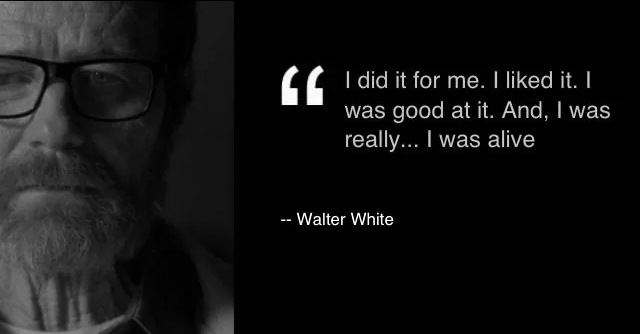
Pressure doesn’t reveal who we should be; it reveals what was already there.
So when picking ~5 core personal values from the many lists out there, the first real question isn’t “what sounds good?” It’s: what comes naturally to me? What can I sustain under pressure?
Hopefully it's not baking meth and taking over a worldwide drug cartel. If you're having dark thoughts, check out Mark Manson's framework for distinguishing between good and bad values.
Takeaway: Pressure reveals which values are truly ours and which we adopted for comfort or compliance
DIAMONDS ARE FORGED NOT FOUND
Choosing values is only the beginning. Living them consistently, under pressure, is what generates a sense of coherence, pride, and self-trust.
Every major psychological framework, from Jung’s individuation to Maslow’s self‑actualization, points to the same idea: people become whole when inner experience and outer behavior align.
Aligning behavior with values primarily means reorganizing parts of our life around them: through habits, decisions, the things we intentionally chose to give up.
This kind of alignment requires structure, repetition, and the ability to consistently come back to those behaviors - even after the inevitable slip ups, and despite the friction life inevitably introduces. Practical examples of how this can look can be found at the end of the article.
But sometimes, and despite our best efforts, we fail to align our behavior with our values. There are many reasons why this can happen. Understanding the problem is fundamental to being able to solve it. Here's my take on four categories of problems that can occur, and potential ways to engage with them:
Sometimes the problem is practical
The value may be genuine, but the structure built to turn it into action isn't working. The expectations are too high, too demanding, or the person too depleted. In these cases, the solution is to:
- Simplify the structure (goals, time or effort allocated to habit formation). Building consistency first is more important than achieving big goals.
- Invest in recovery, in the form of rest and nervous system regulation (physical activity, relaxation, breathwork, etc).
Sometimes the problem is developmental
The value is aspirational, meaning there is a gap between the person's state and their capacity / capability to fully live by it. This gap can feel uncomfortable, but as long as the person is self aware and has a growth mindset, it also presents a big growth opportunity. This is where diamonds are forged: through practice, ability to embrace discomfort, accountability and patience (it takes time!).
I’ve lived this one personally. Early in my role as an Executive Producer, I wanted to live up to a value of earned confidence: trusting my own judgment, being decisive quickly, staying steady under uncertainty. The value was real, but my capacity wasn’t there yet. What closed the gap wasn’t insight, but sheer repetition: building decision-making frameworks, making big decisions, sitting with discomfort, weathering the storm, and learning through consequence. My growth was slow, humbling, but deeply rewarding.
Sometimes the problem is the value
The value may still be important, but other ones have simply become more important. That is why narrowing on 5 values and being clear on priorities is important. The work here is to revise the value, not force something that's no longer true to who we have become.
Sometimes the problem is psychological
In this case, the value is consciously chosen and genuinely believed, but under pressure, something else takes over. Old patterns, unmet needs, or protective strategies hijack behavior. It can feel like being pulled by forces outside conscious choice (because they are). This cannot be solved at the behavioral level alone. We need to look underneath to understand why and what to do about it.
Takeaway: values become real through structure and practice. When they consistently fail, the reason is either practical limits, incomplete development, or deeper psychological forces that effort can't resolve
DIAMONDS FORM IN THE DARK
To understand why some values can't integrate, aka why some of our behavior - which can feel "old", reactive or protective - we need to look beneath conscious choice, to the parts of us that operate automatically.
This is where the work of Carl Jung becomes relevant. His exploration of the unconscious helps explain why some of our reactions can work against the very values we consciously want to live by.
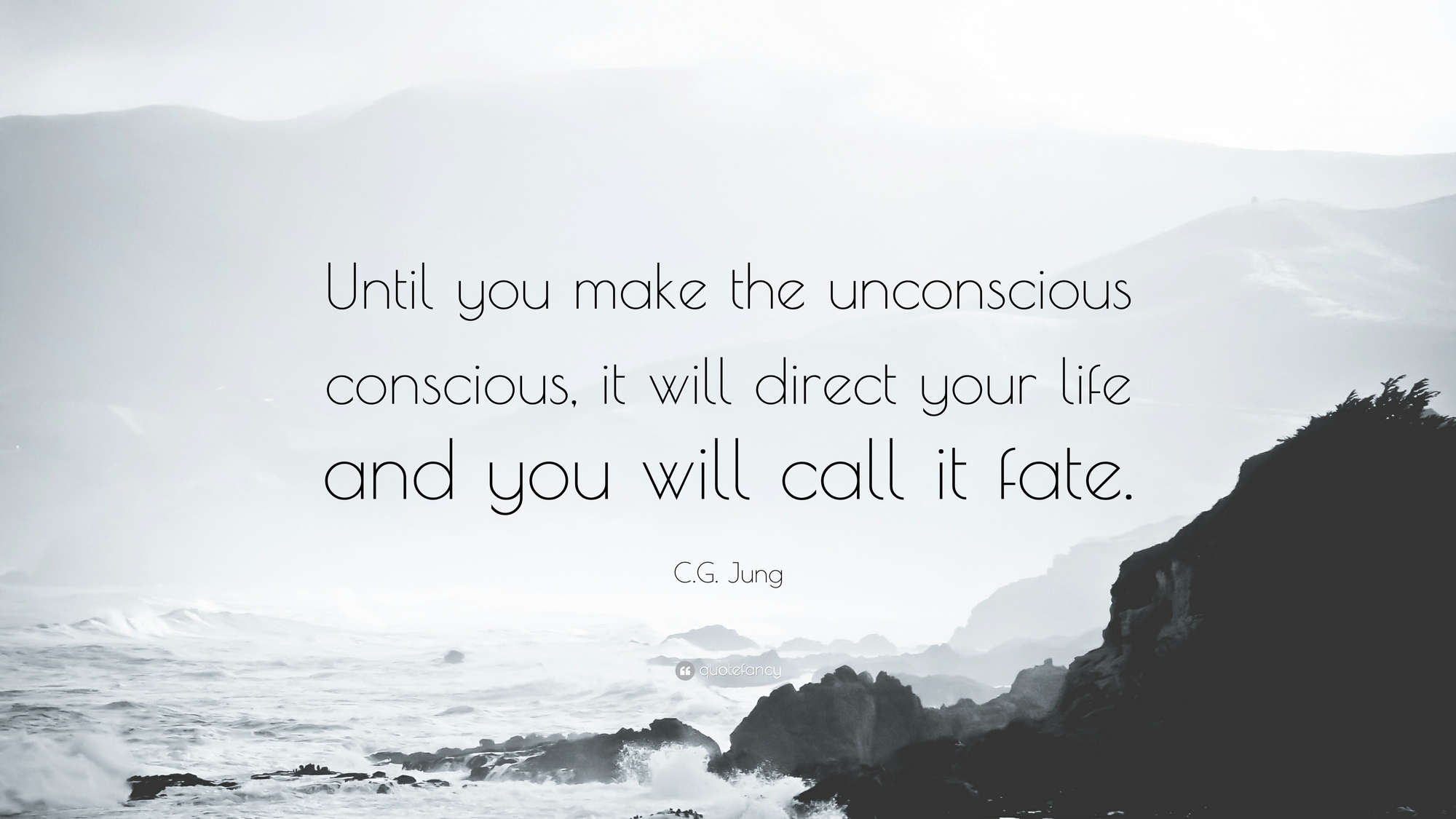
The unconscious holds our unexamined fears, desires, patterns and unmet needs. It’s the parts of us that react when belonging feels threatened, that attacks when it feels small, or retreats when it feels exposed.
When pressure show up and conscious control weakens, these parts take over. In those moments, old strategies surface (often learned early in life), and behavior shifts in ways that can feel beyond us.
This is why someone can deeply understand their values, deeply believe in them sincerely, and still act against them when it matters most. It can feel like being hijacked by your own self.
The work here isn’t to rationalize these moments or dismiss them as lapse in judgement or discipline. It’s to look at them, with compassion, as information about ourselves. To ask what these reactions are protecting, afraid of losing, or trying to secure. And tend to those parts, instead of rejecting them, suppressing them, or shaming ourselves for them existing.

As our understanding of ourselves deepens, our sense of self becomes more accurate, and more honest, and more integrated. And that changes everything: how we see ourselves, the stories we tell about who we are, and, inevitably, the values we can or want to live by.
This is also why values, like the self, aren’t static. They give structure and direction, but can only stay real if they evolve as we do.
Jung once said, “Life really does begin at forty. Up until then, you are just doing research.” As I approach that threshold, it feels less poetic and more lived. When I revisit my values now, I don’t ask who I want to be. I ask what I’ve learned about who I already am, whether I like it or not.
That’s where alignment comes from. Not from chasing unicorns, but from forging diamonds in the parts of ourselves we’d rather not look at.
And that, ultimately, is the point of values: not to describe who we wish we were, but to help us live in line with who we actually are.
Takeaway: some values can’t be lived until the parts of us that take over under pressure are acknowledged, not avoided
FOOT NOTES
Tactical examples for living values
Turning insight into practice requires methodical approaches. Here’s what that has looked like for me in practice.
- First, I get specific about what a value actually means in behavior. I use vivid imagery and generate concrete examples using chatgpt (see prompt below). The goal is to clarify what the value looks like for me.
- Chatgpt prompt: "I want to align my outer reality with the value of [insert value]. Provide examples of what it means to live according to this value."
- Second, I build a simple structure around the value. Structure can look different based on preference. It can look like long-term goals broken into shorter timeframes (quarter), or recurring daily or weekly practices. For example, I live my Fitness and Wellness value by protecting daily time for physical activity. I personally prioritize habit formation over achievement.
- Third, I reflect regularly. Journaling (sometimes daily, sometimes weekly) helps me look back at behavior and decisions. It also helps me notice patterns: when I showed up in alignment, when I didn’t. I try to understand why, and apply learning so I can improve.
To me, the goal isn't perfection, it's trajectory. Consistency over time matters much more than intensity in bursts. Values become embodied through repetition and honest confrontation with reality.
Member discussion